
Most people believe you need tens of thousands of dollars saved before you can even think about real estate investing. That belief keeps thousands of capable people on the sidelines every single year. The truth is, 2026 has brought a unique set of market conditions that actually favor beginners with limited capital, more than many previous years have. In this guide, you'll learn exactly what's driving the market right now, which property types match your goals and budget, and the specific steps you can take to move from curious beginner to confident investor this year.
Table of Contents
- What's driving real estate in 2026?
- Common myths: Why you don't need a fortune to get started
- Comparing property types: Which strategies fit your goals?
- Action steps: How to start your real estate journey in 2026
- Why the old rules of real estate no longer apply
- Ready to start your real estate journey?
- Frequently asked questions
Key Takeaways
| Point | Details |
|---|---|
| Strong 2026 market | Stable cap rates and new trends make 2026 a great year for new real estate investors. |
| Low capital entry | You don’t need a fortune—new strategies and opportunities mean you can start small and still succeed. |
| Asset type matters | Choosing the right property type aligns your risk, capital, and income goals for a successful first step. |
| Action drives success | Following a clear, step-by-step approach helps you avoid fear and take advantage of this year’s opportunities. |
What's driving real estate in 2026?
With the stage set around accessibility, it's important to understand exactly what makes 2026 a unique year for investors. The real estate market doesn't move randomly. It responds to financing conditions, regional demand, and asset-specific performance. When you understand these forces, you stop guessing and start making smarter moves.
One of the biggest shifts this year is the stabilization of cap rates across major property types. A cap rate, short for capitalization rate, is simply the annual return a property generates divided by its purchase price. It tells you how productive a property is as an investment, before financing costs. Higher cap rates generally mean more cash flow relative to price.
Here's a breakdown of where cap rates stand right now:
| Property type | Cap rate range | Risk level |
|---|---|---|
| Multifamily | 4.0% to 6.5% | Lower |
| Industrial | 5.0% to 6.5% | Lower to moderate |
| Retail | 6.5% to 8.5% | Moderate |
| Office | 7.0% to 10%+ | Higher |
According to real estate finance benchmarks, the national average cap rate sits at 5.48%, with Midwest markets averaging 6.68%, creating strong cash flow opportunities for investors who do their homework.
This stabilization matters because it reduces uncertainty. When cap rates are volatile, pricing becomes unpredictable and risk increases. Stable cap rates mean you can model returns with more confidence, even as a beginner. If you want to go deeper on this before you invest, smart market research for 2026 is where you should start.
The most attractive asset types for low-capital investors in 2026:
- Small multifamily homes (duplexes and triplexes): You can live in one unit and rent the others, reducing your personal expenses while building equity.
- Industrial properties in secondary markets: Lower purchase prices outside major cities, with stable demand from logistics and e-commerce businesses.
- Single-tenant retail in Midwest cities: Higher cap rates create better cash flow potential, and tenant stability has improved in 2026.
- Real estate investment trusts (REITs): You can invest in real estate portfolios with as little as a few hundred dollars, no property management required.
These options exist right now. You don't need to wait until your savings account hits six figures. You just need a clear strategy and the knowledge to back it up.
Common myths: Why you don't need a fortune to get started
Now that you know the foundation of the 2026 market, let's confront the common beliefs that hold you back. Most of the advice circulating about real estate investing was written for a different era. The barriers people assume are real often aren't. Let's break down the three biggest myths blocking new investors today.
Myth 1: You need at least $50,000 to invest in real estate.
This is simply outdated. House hacking, seller financing, and REITs all allow you to enter the market with far less. With house hacking, for example, you purchase a small multifamily property using an FHA loan, which requires as little as 3.5% down. On a $200,000 duplex, that's $7,000. You rent out the other unit, which often covers most or all of your mortgage. Learning how to get started with starting with limited funds can show you the exact paths available to you today.
Myth 2: Real estate is too risky for beginners.
Risk in real estate is heavily tied to how much you borrow relative to the value of what you buy, and whether you've done proper research. When cap rates are stable, as they are in 2026, income predictability is higher. Beginners who understand real estate risk actually find that well-researched purchases carry far less risk than the stock market over time. Real estate doesn't go to zero overnight. It provides physical assets and income streams.

Myth 3: Only experienced investors can find good deals.
Experience helps, but it isn't the gatekeeper. In 2026, data is more accessible than ever. Property listing platforms, local tax records, and neighborhood analytics tools give beginners access to the same information professionals use. The difference isn't access. It's knowing what to look for.
"You don't need experience to get started. You need the right education and a clear first step. That combination beats experience every time."
With cap rates averaging 5.48% nationally and higher in cash flow-friendly regions, the numbers are working in your favor right now. Don't let outdated beliefs cost you a year of potential income.
Pro Tip: Before you commit to any strategy, spend two weeks doing nothing but researching one specific market. Pick a city, dig into cap rates, vacancy rates, and job growth data. That focused research will build more confidence than a year of general reading.
Comparing property types: Which strategies fit your goals?
Once you let go of myths, you need to choose the right investment path. Not every property type suits every investor. Your starting capital, risk tolerance, and time availability all matter. Here's a practical side-by-side comparison to guide your thinking.
| Property type | Typical entry cost | Cap rate range | Risk level | Best for |
|---|---|---|---|---|
| Multifamily (small) | Low to moderate | 4.0% to 6.5% | Low | Beginners who want steady income |
| Industrial | Moderate | 5.0% to 6.5% | Low to moderate | Investors focused on long leases |
| Retail (single tenant) | Moderate to high | 6.5% to 8.5% | Moderate | Investors comfortable with tenant research |
| Office | High | 7.0% to 10%+ | High | Experienced investors only |
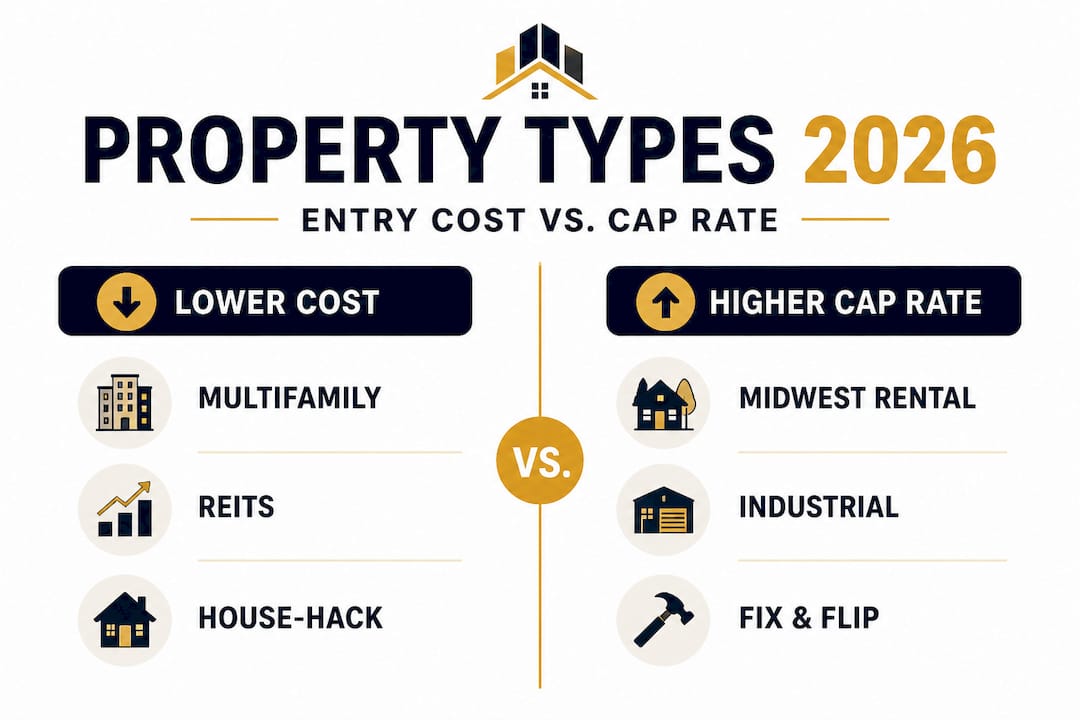
The stabilized cap rates across sectors tell you something important about risk and reward in each category. Office properties offer the highest potential returns, but also carry the highest vacancy risk in a post-remote-work environment. Multifamily carries lower cap rates but offers far more stability for new investors.
Here's a step-by-step approach to matching your goals to the right asset:
- Define your primary goal. Is it monthly cash flow, long-term appreciation, or both? Cash flow investors should prioritize multifamily or industrial. Appreciation investors might look at emerging retail corridors.
- Know your real starting capital. Include your emergency fund. Never invest money you can't afford to keep locked up for at least three years.
- Evaluate your time. Multifamily requires more hands-on management. Industrial properties often have longer leases and fewer tenant issues, meaning less of your time.
- Research your target region. Midwest markets offer better cash flow due to higher average cap rates. Coastal markets often offer appreciation but less immediate income.
- Start with one property type. Spreading yourself thin across strategies as a beginner slows your learning. Pick one lane and get really good at it.
Understanding the benefits for beginners in each category helps you stay focused. And once you're generating income from your first property, learning about building equity opens the door to scaling faster than you'd expect.
Action steps: How to start your real estate journey in 2026
Now, let's translate this understanding into practical action you can take today. Knowing the market is step one. Moving forward is step two. Here are five concrete actions you can take right now to begin your investing journey.
1. Set your financial baseline. Pull your credit report and calculate your debt-to-income ratio. Lenders look at both. You want a credit score above 620 for most conventional loans, and ideally above 680 for better rates. If you need to improve your score first, that work starts now. Even 90 days of focused credit repair can open new doors.
2. Choose your target market and property type. Use what you learned in the property comparison section above. Pick one market, ideally in the Midwest where cap rates favor cash flow, and one property type. Commit to learning that specific combination deeply before expanding.
3. Build your knowledge base fast. Read everything you can about your chosen market and property type. Look at comparable sales, rental rates, and vacancy trends. Learn how to analyze a deal using cap rate and cash-on-cash return. Strategies for making money with little capital can help you find creative entry points you haven't considered yet.
4. Connect with local real estate professionals. Join a local real estate investment group or attend a meetup. Real estate agents, property managers, and other investors are your best sources of off-market information. These connections also help you understand what deals actually look like in your market before you commit to one.
5. Develop daily habits that support your goal. Consistency separates investors who act from those who stay stuck. Setting aside even 30 minutes a day to review listings, track market trends, or study a new concept builds momentum fast. The right income-building habits compound over time just like real estate equity does.
Pro Tip: Use a simple spreadsheet to track every property you analyze, even if you don't buy it. Over time, this builds your judgment. You'll start to see patterns in pricing, income potential, and neighborhood quality that most beginners completely miss. It's one of the fastest ways to start small and win big.
Why the old rules of real estate no longer apply
With a plan in place, it's worth re-examining the rules everyone assumes are unchanging. For decades, conventional wisdom in real estate said: save a 20% down payment, invest in your local market, and prioritize appreciation over cash flow. That playbook worked in a different economic environment. In 2026, it's more limiting than helpful.
Here's what we've seen change, and why it matters for you specifically.
The idea that you must invest locally is collapsing. Data tools now let you analyze markets across the country from your laptop. You can identify cap rates, rental demand, job growth, and population trends in a city you've never visited, and make a confident decision based on real numbers. Many of today's most successful beginners are investing in Midwest markets they found through research, not geography.
The myth that appreciation is king has also faded. In high-priced coastal markets, properties sometimes break even on cash flow for years before appreciating meaningfully. That strategy requires patience and deep pockets. In 2026, the smarter move for low-capital investors is to prioritize cash flow first. Stable income from day one gives you breathing room to hold a property through market fluctuations.
The biggest shift, though, is this: skills now matter more than starting capital. The market is data-driven. Investors who know how to read cap rates, analyze tenant stability, and assess neighborhood fundamentals consistently find deals that others miss. A beginner with solid education and a focused strategy often outperforms a wealthy investor who relies on outdated instincts.
That's not wishful thinking. It's a structural shift in how the market works. Platforms, data access, and low-cost financing tools have leveled the playing field in ways that genuinely benefit the prepared beginner. Developing the right essential skills for beginners is no longer optional. It's your actual competitive edge.
You don't need permission to start. You need preparation. And in 2026, preparation is more accessible than it has ever been.
Ready to start your real estate journey?
If this guide has helped you see that real estate investing is more accessible than you thought, you're already ahead of most people who never take the first step. The knowledge you now have about cap rates, property types, and action steps is a real foundation.

At Real Estate Course, we built a beginner-friendly training program specifically for people like you. For just $19.99, you get instant access to step-by-step modules, action checklists, and a personalized execution plan. No fluff, no jargon, just practical real estate methods that work with limited capital. Whether you're looking to find cheap real estate deals or want to learn how to access affordable auction deals, the course gives you everything you need to move forward with confidence today.
Frequently asked questions
What are the best property types for beginners in 2026?
Multifamily homes and select industrial properties offer stable cash flow and lower risk, making them ideal for new investors, especially given stabilized cap rates in those sectors in 2026.
Is it risky to start with little capital in real estate?
Low-capital investors face less risk in 2026 because the market supports accessible entry points and stable returns, with Midwest cap rates averaging 6.68% giving strong cash flow margins even on smaller investments.
What region has the best cash flow opportunities in 2026?
The Midwest leads the nation with higher average cap rates at 6.68%, making it a consistently strong region for investors who prioritize income over pure appreciation.
Do I need prior experience or special skills to invest in 2026?
No, beginners can start with basic research, a focused market strategy, and access to online educational resources to quickly build the skills and confidence needed to find and evaluate their first deal.