
You don't need a six-figure savings account to start investing in real estate. Thousands of people get into the market every year with limited cash, no prior experience, and a clear plan. The real barrier isn't money. It's not knowing where to begin. This guide walks you through practical, proven steps to start building income through real estate even if your budget is tight. Whether you have $500 or $5,000 to work with, there's a path forward. You just need the right strategy, a willingness to learn, and the confidence to take that first step.
Table of Contents
- Assess your financial readiness and set goals
- Research affordable real estate investment strategies
- Take the first steps: Education and building your network
- Make your first investment: Step-by-step action plan
- Avoid common mistakes and track your results
- Our take: What most new investors get wrong about starting small
- Ready to learn more? Kickstart your real estate journey today
- Frequently asked questions
Key Takeaways
| Point | Details |
|---|---|
| Start with clear goals | Defining your budget and objectives helps keep your investing journey focused and realistic. |
| Choose beginner-friendly strategies | Options like REITs, wholesaling, and house hacking let you get started with minimal capital. |
| Invest in learning and networking | Building your knowledge and relationships in the industry prepares you for smarter investment decisions. |
| Take measured, steady action | Small, informed steps reduce risk and set the foundation for long-term growth in real estate. |
| Track, learn, and adapt | Regularly monitor your investments and learn from both wins and missteps to get better over time. |
Assess your financial readiness and set goals
Having previewed how you can get started with little capital, let's begin by making sure your finances are in order and your goals are well-defined.
Before you put a single dollar into real estate, you need an honest picture of where you stand financially. This isn't about being perfect. It's about being realistic so you can choose the right strategy and avoid costly surprises.
Start by reviewing these key areas:
- Savings: How much can you realistically set aside for investing without touching your emergency fund? Even $500 to $1,000 can open certain doors.
- Debt: High-interest debt, like credit cards, can eat into any returns you make. Address it before investing if possible.
- Credit score: A score above 620 is often the minimum for financing options. A score above 700 gives you much better rates and opportunities.
- Risk tolerance: Can you handle a few months with no return while you learn? Be honest with yourself here.
- Monthly budget: Know exactly how much you can commit monthly, whether that's for learning, tools, or your first investment.
Once you know your numbers, set specific goals. Vague goals like "make money in real estate" don't work. Instead, define what success looks like for you. For example, aim for $300 in monthly cash flow within 12 months, or build $10,000 in equity within two years.
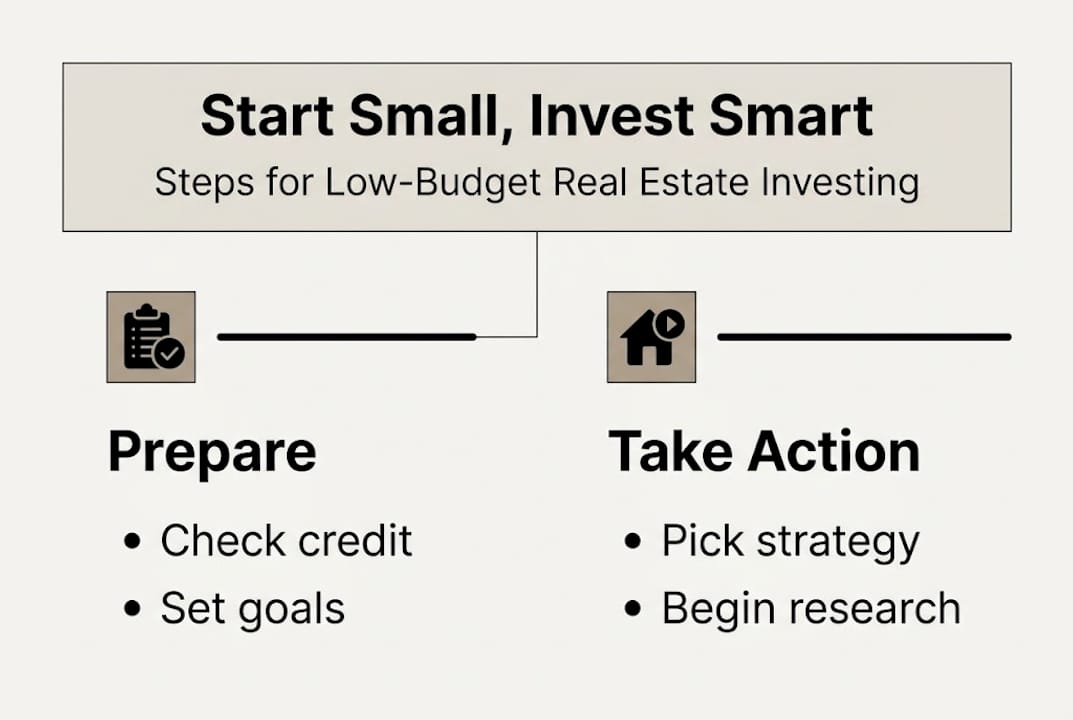
Your goals will shape which strategy you choose next. Someone targeting quick cash will look at wholesaling. Someone building long-term wealth may prefer rental properties or REITs (Real Estate Investment Trusts, which are companies that own income-generating real estate and allow you to invest like you would in stocks).
Pro Tip: Pull your free credit report at AnnualCreditReport.com before you start. Knowing your score early helps you plan your financing options realistically.
Research affordable real estate investment strategies
With goals set and finances in focus, it's time to explore the different ways you can enter the real estate market without breaking the bank.

Not all real estate investing requires buying a property outright. In fact, some of the best entry points for beginners involve investing with low budgets and using creative strategies to generate income without heavy upfront costs.
Here's a quick overview of the most accessible options:
- REITs: Buy shares in real estate companies through the stock market. You can start with as little as $10.
- House hacking: Live in one unit of a multi-family property while renting out the others. Your tenants help cover your mortgage.
- Wholesaling: Find discounted properties, put them under contract, and sell the contract to another buyer for a fee. No ownership required.
- Partnerships: Team up with someone who has capital while you bring skills, time, or deal-finding ability.
- Short-term rentals: Rent a room or property on platforms like Airbnb to generate cash flow faster than traditional rentals.
| Strategy | Startup cost | Risk level | Best for |
|---|---|---|---|
| REITs | Very low ($10+) | Low | Total beginners |
| House hacking | Medium ($3,000+) | Medium | Those who can relocate |
| Wholesaling | Very low ($0 to $500) | Low to medium | Action-takers |
| Partnerships | Low (skills-based) | Medium | Networkers |
| Short-term rentals | Medium ($1,000+) | Medium | Hospitality-minded investors |
Pro Tip: If you're completely new and cash-strapped, wholesaling or REITs are the fastest ways to get moving. Wholesaling teaches you how deals work, while REITs give you instant market exposure with minimal risk.
Take the first steps: Education and building your network
Once you've chosen an entry strategy, true momentum starts with building your knowledge and network.
Knowledge is your biggest asset when capital is limited. Before risking any money, invest time in learning how real estate deals actually work. The good news is that real estate education resources are more accessible and affordable than ever before.
Here's a step-by-step approach to building your foundation:
- Study your chosen strategy deeply. Read books, watch videos, and take beginner-level courses focused specifically on your chosen method.
- Join local real estate investor meetups. Sites like Meetup.com list free events in most cities. These gatherings connect you with active investors willing to share what works.
- Engage in online forums. Communities on Reddit (r/realestateinvesting) and BiggerPockets are full of real investors sharing real experiences.
- Find a mentor. Look for someone who has already done what you want to do. Offer to help them with tasks in exchange for guidance.
- Shadow a deal. Ask an experienced investor if you can observe a property walkthrough or sit in on a deal closing. There's no better classroom.
"The investors who grow the fastest aren't the ones with the most money. They're the ones who ask the most questions and stay curious every single day."
Networking is especially critical when your budget is small. The right connection can lead to a partnership, a deal referral, or an introduction to a lender who works with beginners. You don't need to know everyone. You just need to know the right people.
Make your first investment: Step-by-step action plan
Armed with new knowledge and connections, the next stage is to take your first concrete action.
This is where many beginners stall. Planning feels safe. Acting feels risky. But first investment steps don't have to be overwhelming when you break them into a clear sequence.
Follow these steps to execute your first deal:
- Define your target market. Pick one neighborhood or zip code and learn it inside out. Track prices, vacancy rates, and rental demand.
- Set your buying criteria. Know your maximum purchase price, minimum cash flow target, and acceptable property condition before you look at a single listing.
- Find potential deals. Use Zillow, Realtor.com, local MLS listings, or drive neighborhoods looking for distressed properties.
- Run the numbers. Calculate your expected rental income, expenses (taxes, insurance, repairs), and net cash flow. Never skip this step.
- Get financing pre-approved. Talk to lenders or hard money lenders early so you know exactly what you can afford.
- Make an offer. Use comparable sales data to offer a fair but strategic price. Don't overpay out of excitement.
- Close and manage. Complete your due diligence, inspect the property, review all documents, and finalize the deal.
| Step | Key tool needed | Realistic timeframe |
|---|---|---|
| Target market research | Zillow, local MLS | 1 to 2 weeks |
| Running the numbers | Spreadsheet or calculator | 1 to 3 days per property |
| Financing pre-approval | Lender application | 1 to 2 weeks |
| Making and closing a deal | Real estate attorney | 30 to 60 days |
Pro Tip: Never skip the property inspection. A $300 to $500 inspection can save you from a $10,000 repair bill you didn't see coming.
Avoid common mistakes and track your results
Even the best-planned investments can go awry. Learning from mistakes and tracking results will set you apart from investors who never grow past their first deal.
Beginner mistakes are common, but most are avoidable with preparation. Watch out for these pitfalls:
- Overpaying for a property. Excitement leads to emotional decisions. Always let the numbers guide you, not your feelings about a property.
- Choosing the wrong partner. A bad partnership can cost you money and your reputation. Vet partners carefully and put everything in writing.
- Skipping due diligence. This means failing to check title history, zoning laws, property condition, and neighborhood trends before buying.
- Underestimating expenses. New investors often forget to budget for vacancies, repairs, property management, and insurance. These add up fast.
- Moving too slowly or too fast. Both extremes hurt you. Hesitation means missed deals. Rushing means costly mistakes.
Tracking your results is just as important as avoiding beginner mistakes in real estate. Use a simple spreadsheet to log every property you evaluate, every offer you make, and every dollar you spend or earn. Review your numbers monthly.
Ask yourself: Is my actual cash flow matching my projections? Where did I overspend? What would I do differently next time?
Pro Tip: Set a monthly "investment review" calendar event. Spend 30 minutes reviewing your numbers, your goals, and your next action. Consistency here is what separates serious investors from hobbyists.
Our take: What most new investors get wrong about starting small
Now that you've seen the practical steps, here's what experience in the field has really taught us about starting small.
Most beginners believe their biggest problem is money. It's not. It's impatience. New investors often spend months waiting to save enough for a "real" deal, when a small REIT investment or a wholesaling contract could have taught them more in 30 days than six months of reading.
Small wins early on do something powerful. They build confidence. And confidence leads to better decisions, bolder offers, and stronger networks. The investors who grow fastest aren't the ones who started with the most capital. They're the ones who started, period.
There's also a myth worth addressing: that you need one big deal to change your life. In reality, consistent small deals done right compound over time into serious wealth. Growing slowly and deliberately, while tracking every result, almost always outperforms the investor who swings big once and gets burned.
Start small. Learn fast. Repeat what works. That's the real formula.
Ready to learn more? Kickstart your real estate journey today
If you're excited to apply these steps but want extra support, there's a resource designed just for beginners like you.

At RealEstateCourse.net, you get structured, step-by-step training built specifically for people who are starting with limited capital and zero prior experience. For a one-time investment of just $19.99, you get instant access to practical lessons, action checklists, and a personalized execution plan. No fluff. No jargon. Just real methods that work. Whether your goal is monthly cash flow or long-term equity growth, this course gives you the tools to move forward with confidence. Start your real estate journey today and take the guesswork out of your first investment.
Frequently asked questions
Can you start real estate investing with no money?
Yes, by leveraging strategies like wholesaling, partnerships, or REITs, you can start investing with little or no upfront cash. These methods let you build experience and income before committing large amounts of capital.
What is the easiest way for beginners to invest in real estate?
REITs and house hacking are popular starter strategies because they have low barriers to entry and don't require large sums of money. Both options let you earn returns while learning how the market works.
How do I avoid losing money on my first real estate investment?
Avoid rushing, always do thorough research, start small, and learn from trusted sources to minimize your risk. A careful, numbers-first approach protects you from the most common beginner losses.
How do I track success in real estate investing?
Track your investment's cash flow, expenses, and returns monthly, then adjust your approach based on what the numbers show. A simple spreadsheet is enough to stay organized and improve over time.