
You can learn everything about finding properties, understanding markets, and making offers. But if you can't close, none of it pays. Learning how to close real estate sales is the skill that actually turns your effort into income. Most new agents and investors lose deals not because the client wasn't interested, but because they didn't know how to guide the conversation to a decision. This guide walks you through every stage: preparation, proven closing techniques, executing the closing meeting, and following up in ways that build long-term income.
Table of Contents
- Key takeaways
- How to close real estate sales: the preparation that wins
- Proven closing techniques for real estate
- Executing the closing meeting
- Following up after closing for long-term success
- My honest take on closing in real estate
- Start building your closing skills today
- FAQ
Key takeaways
| Point | Details |
|---|---|
| Prepare before you pitch | Qualify buyers early and gather documents so no surprises kill a deal at the finish line. |
| Match technique to the client | The best closing techniques for real estate adapt to the buyer's personality and readiness level. |
| Expect delays and plan for them | About 11% of contracts face closing delays, so have backup plans ready before closing day. |
| The closing meeting takes 1-2 hours | Know what documents to review and how to guide clients through signing without confusion or panic. |
| Follow-up creates referrals | Post-closing communication turns one transaction into repeat business and word-of-mouth leads. |
How to close real estate sales: the preparation that wins
Most deals are won or lost before you ever sit down at the closing table. Preparation is the hidden part of closing that new agents skip, and it costs them.
Start by understanding the sales cycle. A typical real estate deal takes 60-90 days from first contact to closing. That's a long runway. During that window, buyers get cold feet, life situations change, and competing offers appear. Your job during those weeks is to stay proactively engaged so you're guiding the deal forward, not chasing it.
Here's what solid preparation looks like before you ever attempt to close:
- Qualify your buyer early. Confirm financing pre-approval, understand their timeline, and find out who else is involved in the decision. 78% of real estate decisions involve multiple stakeholders, like spouses, relatives, or business partners. Missing a secondary decision-maker is one of the most common reasons late-stage deals collapse.
- Organize your documents ahead of time. For sellers, have the title, disclosure forms, HOA documents, and repair records ready. For buyers' agents, confirm the pre-approval letter and proof of funds. Scrambling for paperwork on closing day creates anxiety and erodes trust.
- Gather market data to create informed urgency. Pull recent comparable sales, days-on-market stats, and inventory levels. When you show a buyer that similar homes sold in 12 days, you give them a real reason to move without pressure tactics.
- Build rapport before the close. Clients who trust you don't hesitate. Show up consistently, communicate clearly, and position yourself as someone coaching them through a process rather than selling them something.
- Use pre-listing intelligence for sellers. Expert agents treat pre-listing as active intelligence gathering to generate buyer interest before the property hits the market. Reaching out to your network ahead of a listing can create early competition, which makes the eventual closing much smoother.
Understanding how networking builds income and opportunity at this stage pays off enormously when it's time to seal the deal.
Pro Tip: Contact at least three buyer's agents from your network before any listing goes live. Early buzz generates multiple offers, which removes hesitation on both sides and makes closing easier.
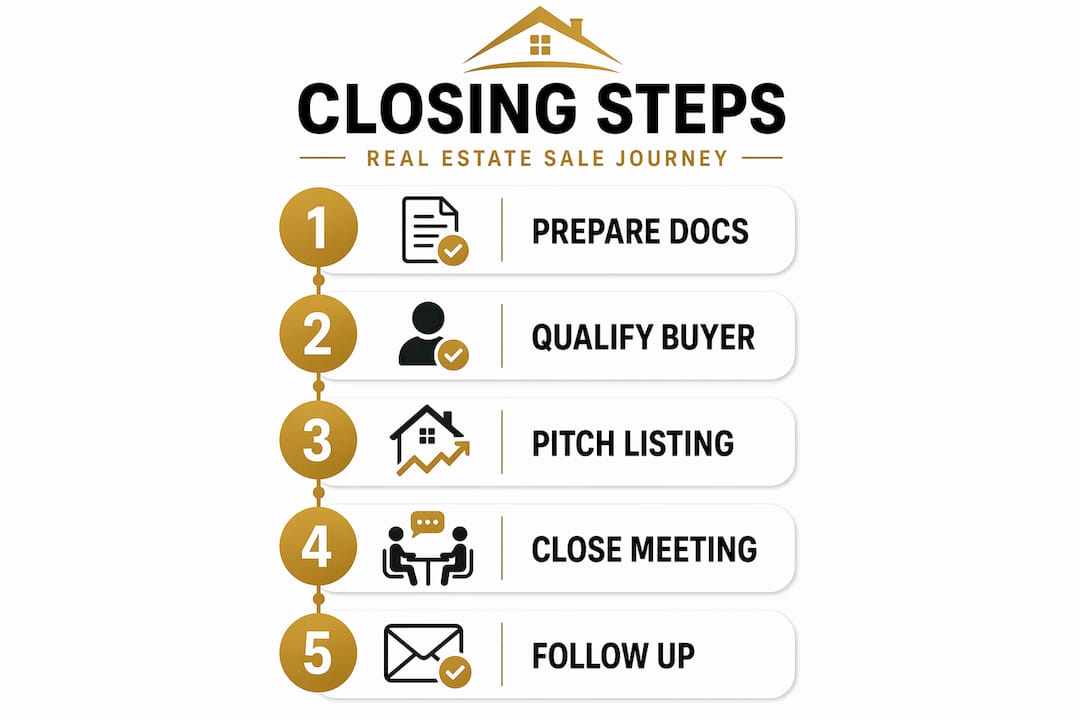
Proven closing techniques for real estate
Knowing how to ask for the sale is the difference between a pending deal and a signed contract. The most effective closing methods match the client's personality and readiness rather than following a rigid script. Here are the most practical techniques you need to know.
-
The Assumptive Close. You speak as if the decision has already been made. Instead of "Would you like to put in an offer?" you say, "Let's put together an offer that makes sense for your budget." This works well with motivated buyers who just need a nudge to act.
-
The Summary Close. Review the key benefits the buyer stated they wanted, then confirm the property delivers on those points. "You mentioned you needed a third bedroom, a short commute, and a yard for your dog. This home checks all three. Ready to move forward?" It reframes the decision around their own words.
-
The Take-Away Close. Introduce real scarcity without fabricating pressure. "There's another showing scheduled for Saturday, and the seller is reviewing any offers that come in over the weekend." This approach works best with buyers who are interested but procrastinating.
-
The Option Close. Give the buyer two paths forward, both of which move toward a decision. "Would you prefer to submit at list price with a quick close, or slightly above with an extended move-in date?" Control stays with the client while you keep the deal moving.
-
The Scale Close. Ask the buyer to rate their interest on a scale of 1 to 10. If they say 7, ask what would make it a 10. This surfaces hidden objections before they become deal killers, and it feels like a conversation rather than a sales technique.
-
The Question Close. Ask a gentle closing question that reveals readiness. Active listening for signals like silences or repeated questions tells you when a buyer is ready but hesitant. Follow those signals with a direct question: "What would you need to feel confident moving forward today?"
Here's a quick comparison to help you pick the right method:
| Technique | Best used when | Tone |
|---|---|---|
| Assumptive Close | Buyer is motivated and engaged | Confident and direct |
| Summary Close | Buyer needs to reconnect with their goals | Logical and reassuring |
| Take-Away Close | Buyer is interested but stalling | Neutral, matter-of-fact |
| Option Close | Buyer wants control over the process | Collaborative |
| Scale Close | You're unsure about hidden objections | Conversational and curious |
One more technique that gets overlooked: visualization. Walk buyers through what their life looks like in the home. "Your kids would use that backyard every weekend." Emotional connection closes deals that logic alone can't.
Pro Tip: Before every client meeting, decide which technique fits their personality. A detail-oriented buyer responds well to the Summary Close. An emotional, first-time buyer often needs visualization more than logic.
Executing the closing meeting
When closing day arrives, you want zero surprises. The closing appointment typically runs one to two hours for sellers, depending on how complex the transaction is. Here's how to manage that time well.

Before the meeting, confirm all parties know what to bring: government-issued ID, certified funds for closing costs, and any outstanding documents. Walk your clients through what to expect so they arrive calm, not anxious.
During the meeting:
- Review the Closing Disclosure together. For buyers, this document outlines loan terms, monthly payments, and all fees. Go through it line by line before they sign. Surprises at the table are the fastest way to lose trust.
- Explain seller net proceeds clearly. Seller closing costs typically run 6-10% of the sale price, which on a median U.S. home means $24,000 to $40,000. Sellers who already know this figure don't panic when they see it on paper.
- Manage the signing process. There will be many pages. Keep the energy calm, pace the signing, and answer questions as they come up without making clients feel rushed.
- Oversee the key handover. For buyers, this is a milestone moment. Acknowledge it.
After signing, the transaction gets recorded with the county, proceeds get disbursed, and the deal is officially done. Knowing the legal steps in property transactions helps you guide clients through this part confidently.
Pro Tip: For mortgage-financed deals, the average closing timeline runs 41-43 days. Set that expectation with clients upfront. When they know the timeline, they stay patient instead of pressuring you or pulling out.
Keep a checklist of common delay causes: financing issues, appraisal gaps, title defects, and missing paperwork. When you spot these early, you fix them before they kill the deal.
Following up after closing for long-term success
Closing the deal is not the end of the relationship. It's the beginning of your referral pipeline. Most new agents celebrate the commission check and move on. That's a mistake.
The clients you helped buy or sell their home are your best future source of business. They know people who will buy and sell. They will recommend you if you stay memorable.
Here's how to build a follow-up system that generates real income over time:
- Send a personalized thank-you note within 48 hours. Not an email. A handwritten card. It takes five minutes and stands out in every mailbox.
- Check in at the 30-day mark. A quick call or message asking how the move went shows you care beyond the commission. It also gives you a chance to address any loose ends.
- Ask for a review at the right moment. About two weeks after closing, ask for a Google or Zillow review. Most happy clients will leave one if you make it easy by sending a direct link.
- Stay in their orbit through the year. Send a market update at 6 months and a home value estimate at 12 months. These touchpoints remind clients you're still their agent.
- Build a simple CRM system. Even a spreadsheet works. Track closing dates, client preferences, and follow-up dates. Systematizing this process is how you scale from one deal a month to many.
These real estate habits build income fast because they compound over time. One referral leads to another, and suddenly your pipeline fills without spending money on ads.
Pro Tip: Create a "past client" list in your phone and set a reminder to send a short personal message on the anniversary of their closing date. It takes 30 seconds and keeps you top of mind when their neighbor asks for an agent recommendation.
My honest take on closing in real estate
I've watched agents lose deals they should have won. And in most cases, it wasn't the market, the price, or the property that failed them. It was the approach.
Too many new agents treat closing like a performance. They rehearse lines and try to "sell" their clients into a decision. That rarely works, and it always feels off. What actually works is transitioning from service provider to trusted advisor who guides clients decisively. When clients see you as someone coaching them rather than pushing them, the resistance drops.
I've also learned that patience is a closing skill. Some buyers need three property tours and six conversations before they're ready. Rushing them loses the deal. Meeting them where they are builds the trust that eventually moves the deal forward.
The biggest shift I made was learning to adapt. Not every buyer responds to the same technique. The analytical buyer wants data. The emotional buyer wants to feel understood. The hesitant buyer needs gentle urgency grounded in facts. When I started reading the person instead of following a script, my closing rate improved noticeably.
If you're just starting out, don't aim for perfection. Aim for practice. Every conversation teaches you something. Every objection you handle builds your confidence. The agents who close the most deals are not the ones who know the most techniques. They're the ones who stayed consistent long enough to get good at reading people.
— David
Start building your closing skills today
If you're serious about closing real estate deals successfully, the fastest way to accelerate is structured training that focuses on real methods, not theory.

Realestatecourse offers a beginner-friendly program built for people starting from scratch. For a one-time cost of $19.99, you get instant access to step-by-step modules covering everything from finding deals to executing transactions and building systems for repeat income. The course covers the closing skills new investors need in plain language with no fluff. You can also explore real estate auction deals as a low-cost way to practice closing on real transactions. Start learning at Realestatecourse and put these strategies to work right away.
FAQ
How long does a typical real estate closing take?
For mortgage-financed transactions, the average closing timeline is 41-43 days. Cash purchases can close in as little as one week, while some loan types take up to two months.
What are the best closing techniques for real estate?
The most effective techniques include the Assumptive Close, Summary Close, Take-Away Close, Option Close, and Scale Close. Matching the technique to the buyer's personality and readiness level produces the best results.
How do you handle objections when closing a real estate deal?
Use the Scale Close to surface hidden concerns before they become deal breakers. Ask the buyer to rate their confidence and then address whatever is holding them back directly with data or reassurance.
What documents are reviewed at the closing meeting?
Buyers review the Closing Disclosure, which outlines loan terms, fees, and monthly payments. Sellers review settlement statements showing net proceeds after deducting closing costs, which typically run 6-10% of the sale price.
How do you build referrals after closing real estate sales?
Send a handwritten thank-you note within 48 hours, follow up at 30 days, request an online review at two weeks, and check in at the 6-month and 12-month marks with market updates. Consistent post-closing communication turns one deal into multiple future referrals.